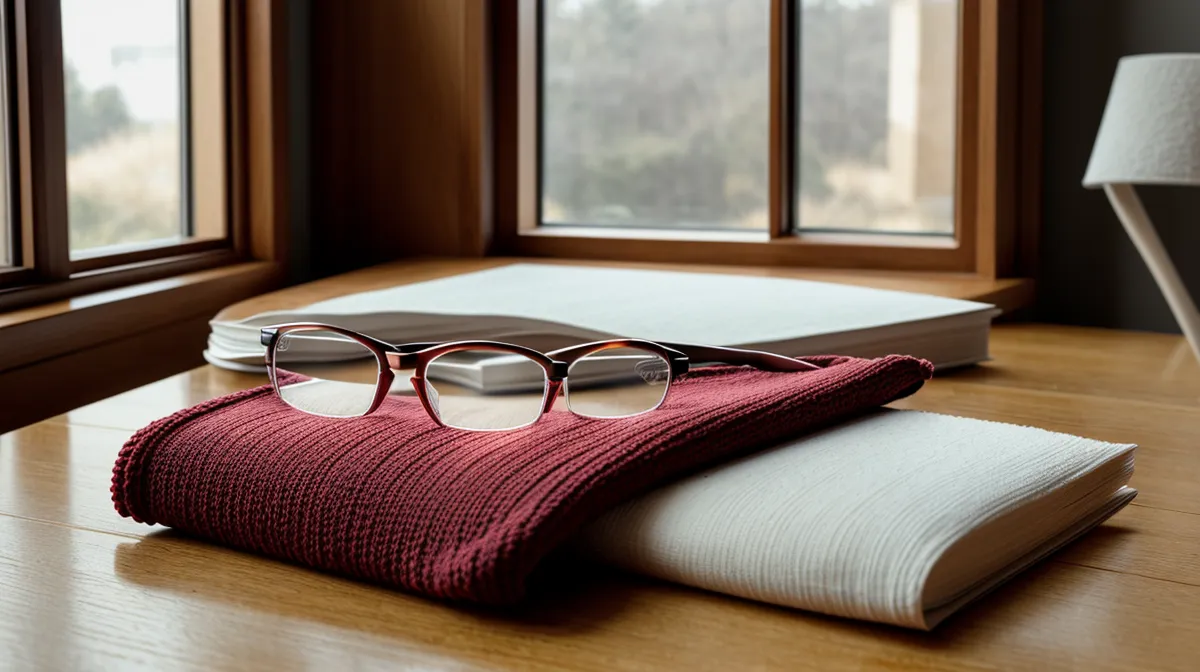
Reading glasses fix one distance. Progressive lenses are supposed to fix near, middle, and far all in a single lens, and that one difference is exactly why switching rattles people who spent a lifetime with 20/20 vision far more than anyone warns you. I made that switch after my aging eyes finally stopped bluffing their way through a stack of essays, and the questions I get asked most about it are not what I expected going in.
Quick housekeeping before we get into those questions: this post contains affiliate links, including a couple for eye supplements I've actually tried. If you buy through them, I earn a small commission at no extra cost to you. None of this replaces a real conversation with your own eye doctor. I'm a retired English teacher, not an eye care professional, just someone who lived through this transition and read more about it than was probably healthy.
What exactly changes when you switch from readers to progressive lenses?
The short answer: your eye doctor is treating presbyopia, the age-related change that makes close-up focusing harder for almost everyone eventually. Readers only correct the near zone, which is great for a paperback and useless for a grocery aisle or a dashboard. Progressives blend all three distances into one lens with no visible line, which is exactly the appeal and exactly the problem, because your eyes have to learn where to look instead of just looking.
Why does everything look like you're underwater for the first while?
This is the part nobody prepares you for. The outer edges of a progressive lens distort a little on purpose, trading some peripheral clarity for a smooth gradient between distances, so when you turn your head quickly the world seems to swim at the sides. People call it the aquarium effect, and it is disorienting enough to make you a little queasy the first time you're in a crowded hallway or coming down a flight of stairs. The fix isn't toughing it out blindly: move your eyes toward what you want to see before you move your head. That one habit shortens the whole adjustment more than anything else I tried.
The Curb That Taught Me to Respect New Lenses
Balance is the real test, not reading. I misjudged a curb once, stepping off what I thought was flat ground while looking through the wrong part of the lens, and felt the pavement arrive sooner than I expected. It wasn't a graceful moment. My proprioception — the sense of where your body is in space — gets briefly scrambled when the visual input doesn't match what your inner ear already expects. If you're navigating stairs or curbs in new progressives, tilt your chin down slightly and look through the lower-middle part of the lens instead of straight ahead. It sounds small. It isn't.
Do progressive lenses cause problems for cycling, sports, or other head-down activities?
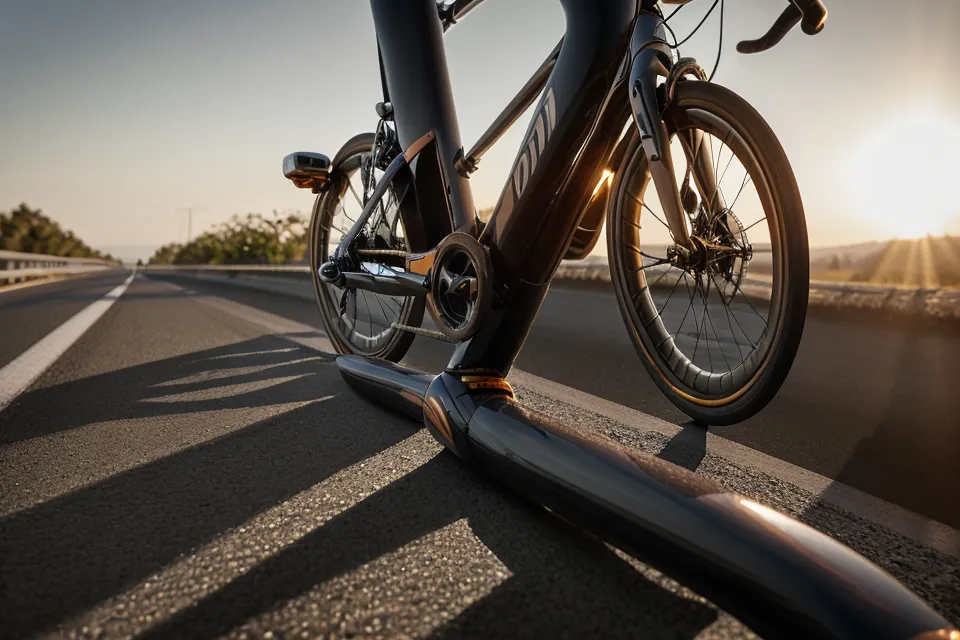
Yes, more than most people expect. Checking a bike computer mounted low means looking through the reading portion of the lens while your head stays angled toward the road, which strains the neck fast if you don't change your riding posture. A friend of mine who plays in a Tuesday-Thursday pickleball league at the rec center told me she had the exact same issue tracking a fast ball at the net, because her eyes kept sliding into the blurry outer edge of the lens whenever she glanced sideways instead of turning her whole head. The fix in both cases is the same: let your head follow your eyes, instead of asking one fixed angle of the lens to do all the work.
Lenses Fix the Mechanics, Not Everything Else
Glasses correct the mechanics of focusing, but they don't touch anything happening further back in the eye. That realization sent me down a research rabbit hole into my vision journey after 50 and macular health research, where I learned just enough to know that vision health after fifty is bigger than any single prescription, and that the lens is only one piece of a much larger picture I won't try to cram into this post.
Brighter Lighting Doesn't Fix a Focusing Problem
I tried. Before I gave in to progressives, I replaced every bulb in my reading nook with the brightest daylight LEDs I could find, convinced that more light would do what my eyes no longer could. It helped for about a paragraph. More light makes small print easier to see when the problem is dim rooms or poor contrast, but presbyopia is a focusing problem, not a lighting problem, and no amount of wattage fixes a lens that won't flex the way it used to. If you've tried the lighting trick and you're still holding things at arm's length, that's your answer. It's time for an eye exam, not a new lamp.
Eye Supplements Won't Replace Your Lenses, But They're Not Nothing
Here is the thing — I've gone through five different eye supplements since that first pair of progressives, and most of them did very little beyond lightening my wallet. The one I've stuck with longest is VisiFlora, mostly for its angle on the gut-eye connection, a link between digestion and eye comfort I won't pretend to fully understand, but I noticed enough of a difference to keep taking it. My eyes feel less gritty by the end of a long reading session than they used to. I've written more about why in eye supplements like VisiFlora. I also keep TheyaVue around for a broader, less targeted approach on weeks when my diet runs mostly on toast and tea, and I compared the two in more detail in iGenics and TheyaVue for macular health.
How do you know the adjustment is actually finished?
You stop thinking about the glasses. That's the real marker, not a date on a calendar. For me it showed up on an ordinary night when I glanced at the alarm clock across the bedroom and read the digits straight off, sharp instead of smeared into that familiar gray fuzz, without reaching for anything or even registering what I'd done until a few seconds later. No nausea, no tilt of the chin, no half-second delay while my eyes hunted for the right band of the lens. That's the actual test — not a clean line on an eye chart, but a moment so unremarkable you almost miss that it happened.

If you're in the fishbowl phase right now, two things actually move the needle: patience with your eyes, and honesty with your doctor about whatever specific activity is giving you trouble, whether that's stairs, the handlebars of a bike, or a stack of ungraded essays. On the supplement side, if you want to see where I landed after trying the others, VisiFlora is the one still in my cabinet, and their site has current details if you want a closer look. We spent decades never thinking about our eyes at all. A little deliberate care now, in the lenses you choose and what you do for your eyes behind the scenes, is a fair trade for the years of reading still ahead.