
I'm three bites into a plate of sautéed spinach and eggs, half-listening to a podcast, when it hits me how much I used to dread this vegetable. Raw kale, blended into a green sludge every morning, was supposed to be the fastest route to better macular support and an eye-friendly diet my aging vision could actually live on. It wasn't. Figuring out why turned into the closest thing I have to a real system for eating well over 50, and it started with admitting the first fix I tried had nothing to do with food at all.
The first fix was embarrassingly simple: a three-pack of dollar-store readers, scattered one to a room so I'd never get caught squinting at a label again. Cheap, and it solved exactly nothing about why my eyes felt tired by the bottom of a page. It just hid the problem behind a pair of readers in every drawer. Once you start looking, cheap fixes for near vision are everywhere. What's harder to find is anything that addresses the eyes themselves instead of the symptom.
My eye doctor was the one who first used the word macular during a routine exam, the same visit where he mentioned presbyopia like it was old news I should already know. It wasn't old news to me. I left that appointment fixated on the idea that food might do something readers and supplements couldn't, and kale seemed like the obvious answer. It's the vegetable every eye-health article points to first, loaded with lutein and zeaxanthin, two nutrients that cluster in the macula, the part of the eye responsible for your sharpest, most detailed vision.
The Kale-Only Plate Wasn't Cutting It
So I committed to the raw approach for months: massive smoothies most mornings, a fistful of raw spinach added to whatever else I was eating. It felt virtuous. It also felt like homework.
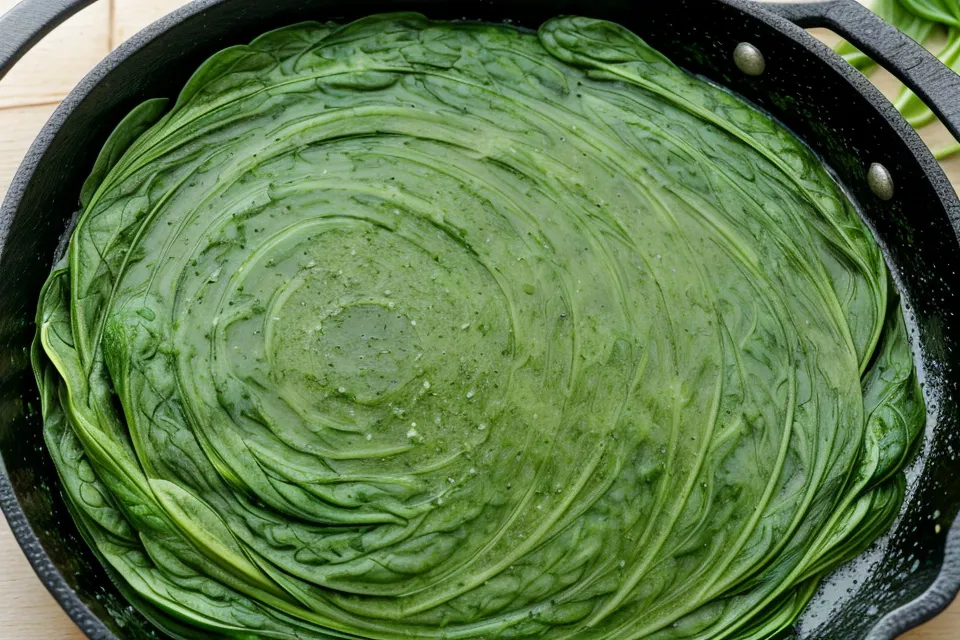
What I didn't know then is that raw kale and spinach carry high levels of oxalates, compounds that get in the way of your body actually using what you eat. Lutein and zeaxanthin are also fat-soluble, tucked inside the plant's cell walls, which raw chewing barely touches. Someone who used to teach high school chemistry pointed out that lightly cooking greens — a quick sauté in olive oil does it — breaks those walls down and makes the nutrients far more available. Hitting a meaningful amount through raw food alone, every single day, just wasn't realistic for me, which is part of why I eventually went looking into the benefits of eye vitamins with meso-zeaxanthin to fill in what the kitchen couldn't.
The Nutrient Difference: Raw vs. Cooked
Here's the actual comparison, side by side. Raw greens are faster (no stove, no cleanup, blend and go), and if mornings are tight, that matters more than any nutrient chart. Cooked greens take five extra minutes and a pan, but what your body actually absorbs from the same bunch of spinach goes up once it's warmed through with a little fat. That's not a small difference when you're trying to get a meaningful amount through food instead of leaning entirely on a capsule. A reader named Vivienne Pratt, a retired librarian who emails me every few weeks, asked recently whether any of this matters if she just takes a gummy instead. She wants to know the format before she'll consider anything else, and I don't blame her. Getting nutrients into your body reliably matters more than which delivery method feels virtuous.
Vivienne's last email ran three paragraphs, questions stacked on top of each other the way only a former librarian's would be, and I was most of the way through it before I registered something odd: I hadn't once reached for my glasses or nudged up the font size, a reflex that used to kick in by the second sentence. That's not something diet alone fully explains. It's also not nothing.
Blueberries, Salmon, and the Rest of an Eye-Friendly Diet
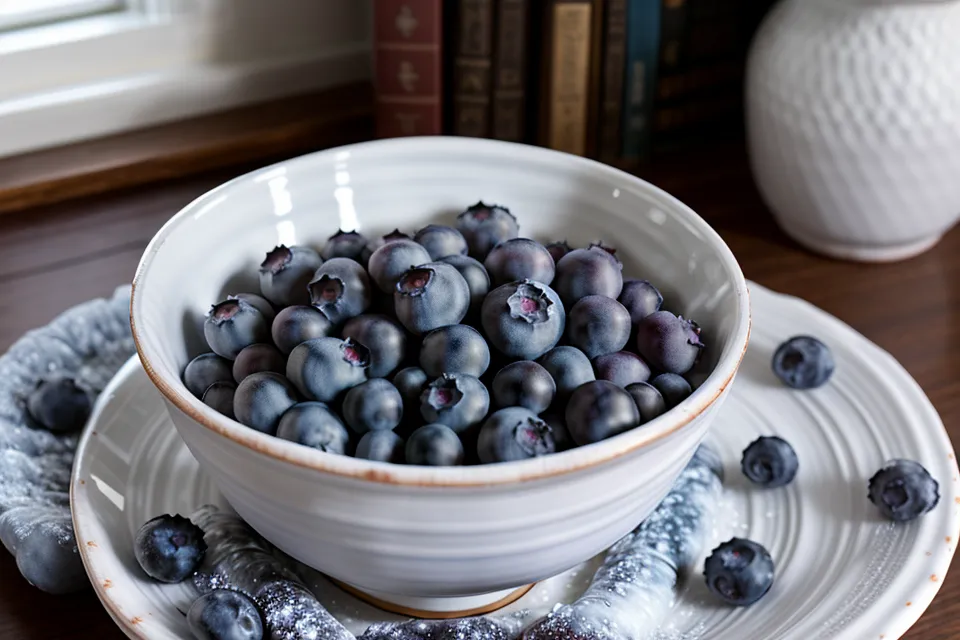
Blueberries turned out to be the easy win in all this. There's a specific, uncomplicated pleasure in a handful of frozen ones cracking against your teeth on a warm afternoon (no blender, no bracing yourself first). They're rich in anthocyanins, which support blood flow to the eyes, and unlike a smoothie, nobody has to talk themselves into eating them. Wild salmon became a regular fixture too, mostly because I finally connected a dull ache behind my brow (the kind I used to blame on bad classroom lighting) to years of skipping omega-3s. Once diet and general eye care over 50 became something I paid attention to together, that ache showed up less often. I wrote more on why vision changes are causing headaches for readers over 50 if that sounds familiar.
Everyone's eyes age on a different schedule, which is worth saying plainly before anyone reads this as a formula. What worked for my kale fatigue might not touch your particular struggle, and some issues need more than a better plate. I've had to sort through dealing with blurry vision in one eye separately, and diet had nothing to do with fixing that one. Diet doesn't touch everything: it hasn't done much for the floaters that drift through my vision some mornings, or for how my astigmatism has shifted since I turned fifty, or for eyes that feel dry by dinnertime no matter what I ate at lunch. Some of what I've read connects gut health to eye health too, which is its own rabbit hole I haven't fully gone down.
Choosing Between the Two Plates, Honestly
My friend Lorraine Beckett, a retired science teacher I taught alongside for over a decade, handles all of this completely differently than I do. She keeps a written log of every change and exactly what she notices afterward, dated and specific, while I mostly feel my way through it and hope I remember what changed. Her method would probably serve either of us better if either of us were being scientific about it. Mine is more honest about how most people actually eat.
I do most of this thinking in the little sunroom off our kitchen, the one that catches the afternoon light through its windows and never quite loses the smell of the paperbacks stacked on the shelf beside my desk. There's a wall calendar there too, half covered in penciled notes about which supplement or which meal I tried and what happened after, though lately it's mostly grocery lists. A mug of tea always goes cold at my elbow before I remember it's there.
If I had to hand someone a rule, it would be this: raw is fine when you're pressed for time and just need something on the plate, but if you can spare five extra minutes at the stove, cooked and varied gets you more nutrition per bite, and it's easier to keep doing for years instead of weeks. I do most of my grocery shopping now at a small market on Hawthorne Boulevard, where the produce is good enough that eating this way stopped feeling like a punishment. It hasn't erased every problem. Night driving still asks more of my eyes than it used to, and the amount of light over a book matters more than I ever gave it credit for. But a plate of sautéed greens, blueberries, and salmon does more for my eyes than a blender full of raw kale ever did. For anyone curious about the night side of things, I've written separately about vitamin A for night blindness.