
Carrots get all the credit for good vision. Kale gets almost none of it — which is backwards if what you're after is eye nutrition built around macular health rather than night vision. The dietary carotenoids your macula actually uses aren't the orange ones most of us were raised on. They're the dark green ones that got pushed to the side of the plate for fifty years.
My own grocery cart used to prove the point, back when I never thought twice about either. Bags of baby carrots sat up front; a bruised bunch of kale, if I bought any at all, got buried at the bottom under the milk. That ratio is exactly backwards for anyone past fifty trying to protect the macula, the small patch at the center of the retina responsible for sharp, straight-ahead detail: the words on a page, a face across the table, the fine print on a pill bottle. I'd already started picking this apart in my vision journey after 50, and the carotenoid question kept surfacing.
Vitamin A earned its reputation honestly, just not for this particular job. It handles rod cells and dim-light adaptation, the part of vision that adjusts when you walk from a bright porch into a dark hallway — a separate mechanism from anything happening at the macula. Macular aging responds to two specific carotenoids instead: lutein and zeaxanthin.
Why Vitamin A Isn't the Answer for Macular Health
I found that out the inconvenient way. Hoping the vitamin A printed on the label would cover my macula too, I added a basic Centrum Senior multivitamin to my morning routine. Nothing changed, because a general multivitamin and a macular carotenoid aren't interchangeable — one supports rod cells and immune function, the other sits directly in the tissue I was actually trying to protect.
Large-scale AREDS2 trial data settled on a workable benchmark: 10 mg of lutein alongside 2 mg of zeaxanthin daily, a five-to-one ratio tied to measurable support for macular pigment density over time. Measured against that benchmark, the gap between what the research recommends and what an average plate provides was bigger than I expected, and no multivitamin was going to close it.
The Real Sources of Lutein and Zeaxanthin
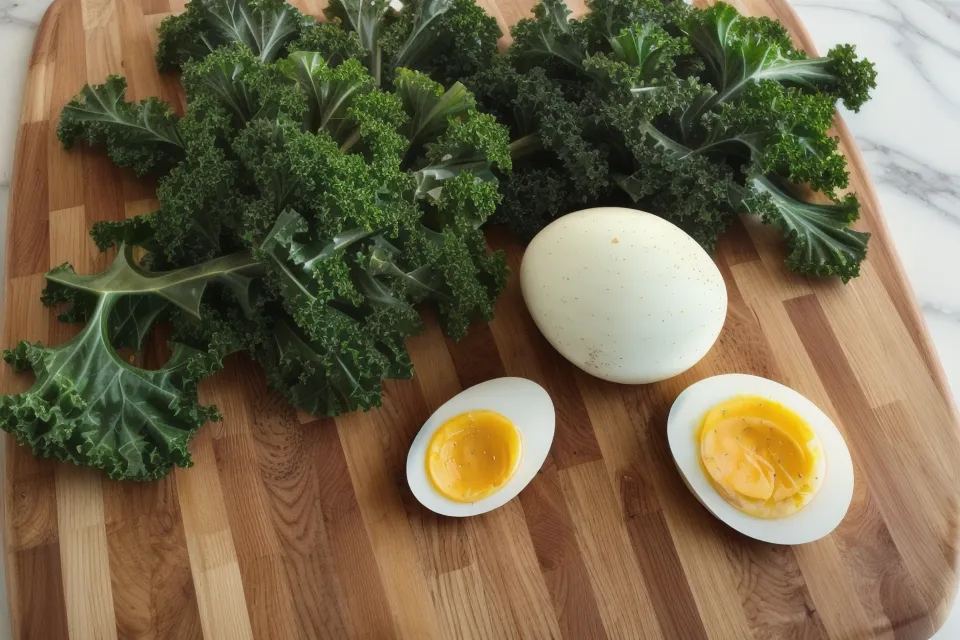
Dark leafy greens win on raw density. A cup of cooked kale, chard, turnip greens, or dark spinach carries far more lutein than any reasonable amount of carrots, carotenoid for carotenoid. Egg yolks lose on quantity but win on delivery: the lutein and zeaxanthin in a yolk arrive already suspended in natural fat, a form your gut absorbs far more easily than the same nutrient sitting bare inside a leaf.
Cold-water fish such as wild salmon, sardines, and mackerel carry no lutein or zeaxanthin at all, but they supply DHA, a fat that's structurally part of the photoreceptor membranes themselves — a different nutrient doing a different job in the same neighborhood. Orange and yellow produce, like bell peppers, corn, and summer squash, lean toward zeaxanthin specifically, which concentrates at the very center of the macula, while lutein spreads around the surrounding ring.
Raw Spinach or Sautéed Kale: Which One Reaches Your Bloodstream?
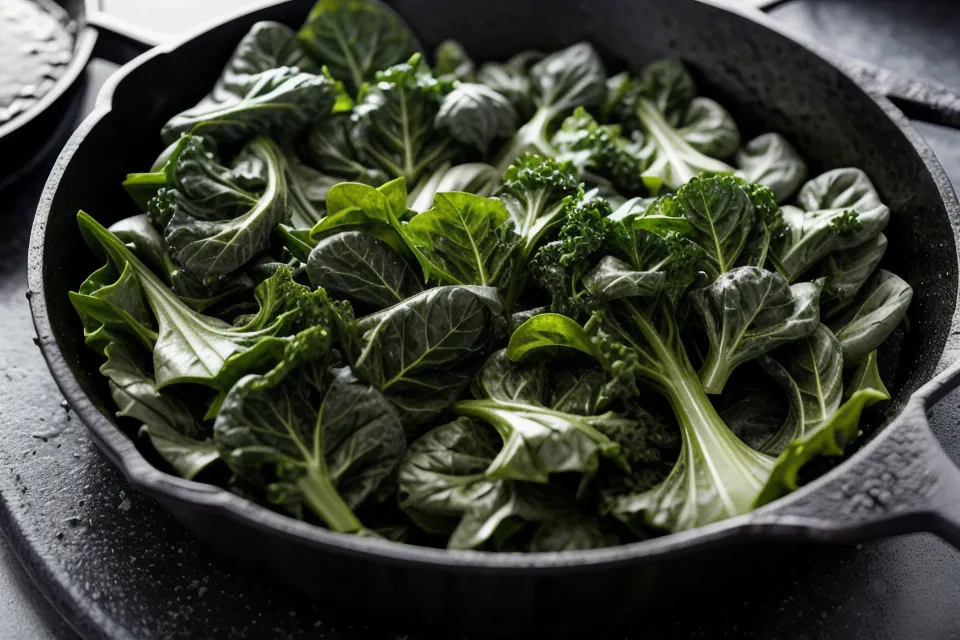
Here's the comparison that actually matters, and it has almost nothing to do with how much kale ends up on your plate. A dry bowl of raw spinach dressed with fat-free vinaigrette and the same greens sautéed in olive oil can carry roughly identical lutein on paper. In practice, they aren't close. Lutein and zeaxanthin are fat-soluble, which means your gut needs dietary fat present at the same meal to package them into a form it can absorb at all. Skip the fat, and most of that carefully chosen lutein passes straight through you — fiber delivered, bloodstream untouched, macula none the wiser.
Raw greens carry a second strike too: the carotenoids sit locked inside tough plant cell walls that teeth and stomach acid only partly break down. A light sauté loosens that structure enough to free up more of what's inside. None of this makes salads wrong. It makes a salad with no olive oil, avocado, or sunflower seeds mostly a fiber delivery system and very little else.
My neighbor Deborah Umezu switched almost entirely to audiobooks once evening reading started tiring her eyes out faster than she liked, and I don't blame her for it — that's a reasonable trade to make. I went a different direction and started dressing every bowl of greens like I meant it, half an avocado or a real pour of olive oil, no exceptions. Walking the rose garden loop through Ladd's Addition not long ago, I read the fine print on a passing dog's harness tag from several feet off without reaching for the glasses hanging around my neck. One afternoon like that proves nothing on its own, but it matched what I was hoping the fat-paired greens were doing underneath.
Food First, Supplement as Backup
Zinc and copper balance is its own piece of this puzzle, one that deserves its own full treatment rather than a crammed-in paragraph here. The same goes for vitamin E's antioxidant role, and for how differently your body absorbs a capsule compared to lutein wrapped inside an actual egg yolk — different mechanisms, different conversations.
The honest comparison, laid out plainly, comes down to two columns. Column one: real food, eaten consistently, with fat included on purpose, covers most of the lutein and zeaxanthin gap for anyone willing to cook a few nights a week. Column two: a targeted supplement covers the gap on the weeks when cooking doesn't happen, which is why I eventually looked past another bottle of the same generic multivitamin that let me down the first time and read through why I swapped my daily multivitamin for targeted macular ingredients.
Which Column Should You Actually Live In?
Choose real food first if you cook four or five nights a week and don't mind keeping olive oil and eggs on hand. It costs less, it covers more nutritional ground than a single pill, and it did more for how my eyes felt by evening than anything in a bottle managed. Choose a targeted supplement as your backbone if your weeks are unpredictable, if cooking consistently isn't realistic right now, or if you've already tried the food-first route and know your own plate isn't getting you there. Most people past fifty end up needing both columns at once, just in different proportions depending on how the week looks.
None of this touches presbyopia, the stiffening of the lens that makes reading glasses necessary once you're past forty-five — food doesn't reverse that, and I still keep a pair within reach for anything smaller than a grocery receipt. How to increase macular pigment density naturally is a longer conversation about the pigment side specifically, worth a read if a few paragraphs here left you wanting the rest of it. What's worth asking your own eye doctor, rather than a retired English teacher on the internet, is where your particular retina stands right now, before you decide how hard to lean on either column.