
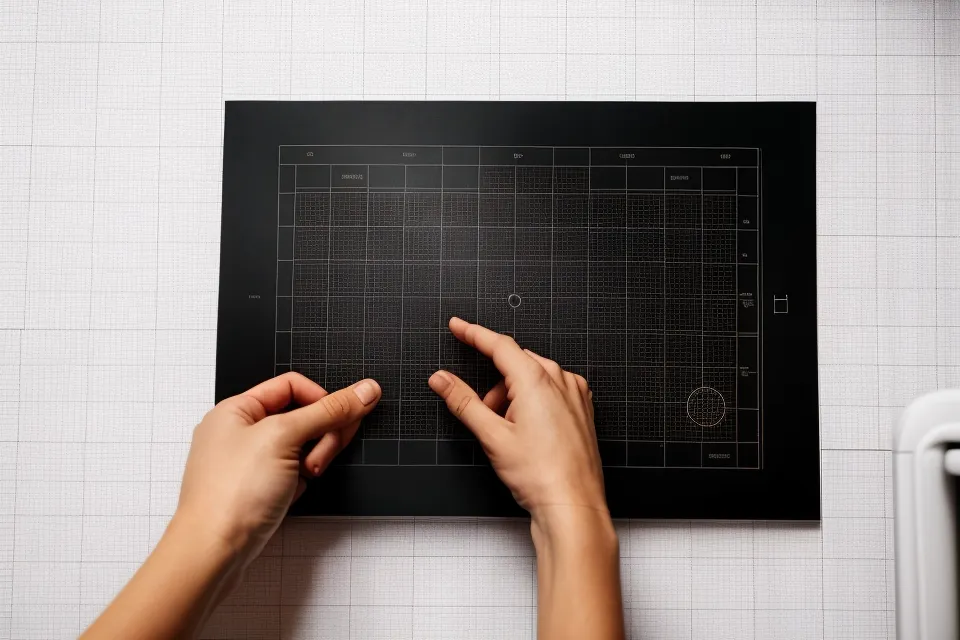
Eleven. That's how many times I've peeled a fresh Amsler grid off the printer and taped it to my refrigerator door, usually because the last one got splattered with reheated sauce before I noticed anything useful on it. The habit started last November, on one of those grey Portland evenings made for curling up with a book, when the lines of print I was reading started rippling like something seen through water. Not the usual blur I'd made peace with since turning fifty. This was different, and different is exactly the word doctors want women over fifty to pay attention to when it comes to macular degeneration.
Here is the thing nobody tells you up front: the real warning signs rarely show up as one dramatic blackout. They're quieter and far easier to explain away — text that goes wavy only in the middle of a line and not at the edges, colors that look slightly rinsed out, a smudge that appears wherever you're actually looking and vanishes the second you glance to the side. None of those sound like an emergency. That's exactly the problem.
The wavy-text thing is the one that still unsettles me most, because of how selective it is. A sentence can start sharp at the left margin and go soft by the third or fourth word, like the page itself loses confidence halfway through, then snap back to normal by the next line. It isn't constant, which is almost worse — if it were always there, I'd have gone to urgent care the first week.
The Reality of Fifty, and Why My Eye Doctor Got Serious
Thirty years of grading essays and catching a whispered conversation from across a classroom gave me real confidence in my eyes. I never thought about them, which, it turns out, was exactly the problem. Then I hit my late forties and couldn't read notes I'd written on the whiteboard five minutes earlier. The speed of it still catches me off guard.

My doctor didn't sugarcoat fifty as a threshold. She explained there's more than one form macular degeneration can take, and that they don't all move at the same speed — some stay quiet for years, others escalate fast enough to notice within weeks. She handed me a simple checkerboard of lines, an Amsler grid, and told me to check it under good light and call her the moment any part of it looked wavy or went missing.
I'm not a doctor, and nobody should mistake thirty years of teaching English for a medical degree. But I know how to study for something that scares me, and I started treating my own vision like a subject I needed to pass.
Signs That Don't Look Like Warnings At First
Early this spring, walking the rose beds at Ladd's Addition, I noticed the reds weren't hitting the way they used to — muted, almost dusty, like I was seeing them through a thin curtain. It's easy to blame that on being over fifty and call it a day. A real drop in color intensity deserves more attention than that, because the macula is the part of the eye responsible for exactly that kind of sharp, saturated detail.
Depth perception slipped around the same time — misjudging a curb became a small, regular jolt. A few new floaters drifting through my vision that same month didn't calm my nerves either, even though floaters are usually their own unrelated nuisance. Then, one afternoon in the hallway, a straight door frame looked like it had picked up a faint curve at the edge of my sight, and that one stopped me cold.
The central blind spot was the strangest of all — not darkness, more like a smudge that followed wherever I looked and disappeared the instant I looked just beside it. Tilting my head trying to find a clear spot that used to be everywhere gets old fast. I started keeping a log of exactly when these moments happened, which I wrote about in My Vision Journey After 50: What My Tracking Notes Taught Me About Macular Health, mostly because it's too easy to talk yourself out of a symptom a week later.
Which Signs Are Really About the Macula, and Which Are Just Getting Older
Not everything that goes wrong after fifty points to the macula. A lot of what reading glasses fix is a completely different problem — the lens changing shape, not the retina itself — and that's a separate headache from what I'm describing here. Needing far more light to read comfortably falls into that same ordinary-aging bucket, most of the time.
Night driving has gotten harder too, with glare that takes longer to clear and a slower adjustment once the sun goes down, though that's its own tangle worth separate attention rather than lumping in here. The cloudiness a cataract causes can feel confusingly similar from the inside, which is part of why an actual exam matters more than any self-diagnosis I could offer.
For a while I was convinced my laptop was to blame for all of it, so I stuck one of those blue-light-blocking screen protectors over the screen, certain that would calm the swimming text down. It didn't touch the wavy lines at all, which told me something useful: whatever this was, it had nothing to do with screens.
Paying Attention Instead of Panicking
Since that appointment, I've gone through five different eye supplements, with mixed results. One made my stomach turn every single morning. Another did nothing I could detect after months of taking it faithfully. There's real research on the carotenoids the macula depends on and the pigment density behind all of it, but that's a deeper subject than I can do justice to in a single post.
A generic one-a-day never had the concentrations my eyes seemed to need, which is most of why Why I Chose TheyaVue Over My Standard Multivitamin for Macular Health came out of me as its own post rather than a paragraph. Some of what helped had nothing to do with the eyes directly, either — there's a gut-eye connection worth reading into on its own, a zinc-to-copper balance that's surprisingly easy to get wrong, and absorption differences between capsules that nobody warns you about until you've already wasted money guessing.
My book club co-founder Nora swears the biggest change for her wasn't any supplement at all, just moving her reading lamp to a spot where it actually hits the page instead of her shoulder. A reader named Edmund, a retired engineer who found this site through a woodworking forum, still emails occasionally to complain about filler ingredients in budget-brand capsules — fairly, from what I've read since.
Around twelve weeks into actually paying attention to all of this instead of just worrying about it, I was standing at the back fence talking to a neighbor and read the small lettering across his T-shirt without squinting first. Small thing. It stuck with me anyway.
The One Habit Worth Starting Today
If you take just one thing from all of this, let it be the grid on the fridge, or something like it — not because it's magic, but because it gives you a fixed baseline to check against, instead of relying on memory to tell you whether something's actually changed. Aging takes plenty from us gradually enough that we stop noticing. Vision doesn't have to be one of those things if you give yourself a way to measure it.
Look, if the lines on your own page start to dance, or your favorite red sweater suddenly reads more like a dull brick, don't file it under "just another birthday." Get it checked, and keep checking. We've spent decades reading everyone else's stories. We deserve to keep seeing our own clearly for a long time yet.